Monorail Best Practises
Monorail systems have evolved from experimental urban transport concepts into proven solutions for specific mobility challenges. Over time, advances in engineering, automation, and materials transformed monorails into reliable, safe, and efficient systems, particularly suited for dense urban environments.
Having found their first applications in theme parks, monorails today operate in cities, airports, and dedicated corridors worldwide. Their development has been driven by the need to reduce surface congestion, minimize land use, and integrate public transport into already built-up areas. Fully automated operations, high safety standards, and quiet electric propulsion have further increased their attractiveness.
The use cases for monorails arise where conventional rail or metro systems face physical, financial, or spatial limitations. These include medium-capacity corridors, urban areas with narrow rights-of-way, complex terrain, and environments where visual impact and noise reduction are critical. As cities continue to seek sustainable and space-efficient transport solutions, monorails have established themselves as a mature, niche technology with clear advantages in well-defined applications.
As evidence, you will find a few examples of successful and very different monorail applications on this page.
Monorails are Safe. Reliable. Energy efficient. Carbon-free. Cost effective. Fast. quick to implement. Exciting.
Intended use and performance-oriented classification of monorails
The development of monorail systems has always been motivated by the need to bring a cost-efficient alternative to classic railway systems into the market. Apart from the various applications in amusement parks, zoos, or as short direct connections with sometimes only two stations (e.g., airport applications), different systems have established themselves as public transport applications.
Most monorails are straddled monorails and run with rubber-tired wheels on steel or concrete track beams. Despite earlier ideas to design monorails as mainline systems as well, monorails are mainly used for public transport with typical line lengths between 10 and 30 km. In recent years, some lines have reached even lengths of over 50 km (Chongqing, Hancheng, both China and Cairo, Egypt).
Depending on the application, the transport capacity of monorails varies from a few thousand to over 40,000 passengers per hour per direction (pphpd). It thus reaches the values of medium sized metro systems. Lower infrastructure costs in combination with automation of the operation up to GoA4 (due to segregated track infrastructure) favor an economic operation even with lower transport demand.
| Criterion | Usual expression | Comments |
|---|---|---|
| Line length | 10 - 30 km | |
| Horizontal alignment radius | 40 - 70 m | Minimum implemented so far 18 m |
| Longitudinal gradient | 0 - 10 % | Maximum implemented so far 12 % |
| Maximum running speed | 60 - 100 km/h | |
| Commercial speed | 15 - 40 km/h | Average trip time (including station time, boarding, dwell time) divided by line length for a typical route |
| Transport capacity |
Small: 2,000 pphpd Standard: 4,800 pphpd Large: 12,500 pphpd |
For public transportation with 4-car trains at 90 sec. headway typically 22,500 pphpd (can go up to 48,000 pphpd with up to 8-car trains) |
| Frequency |
3 - 15 min. minimum 60 sec |
|
| Distance between stops | 800 - 1,500 m |
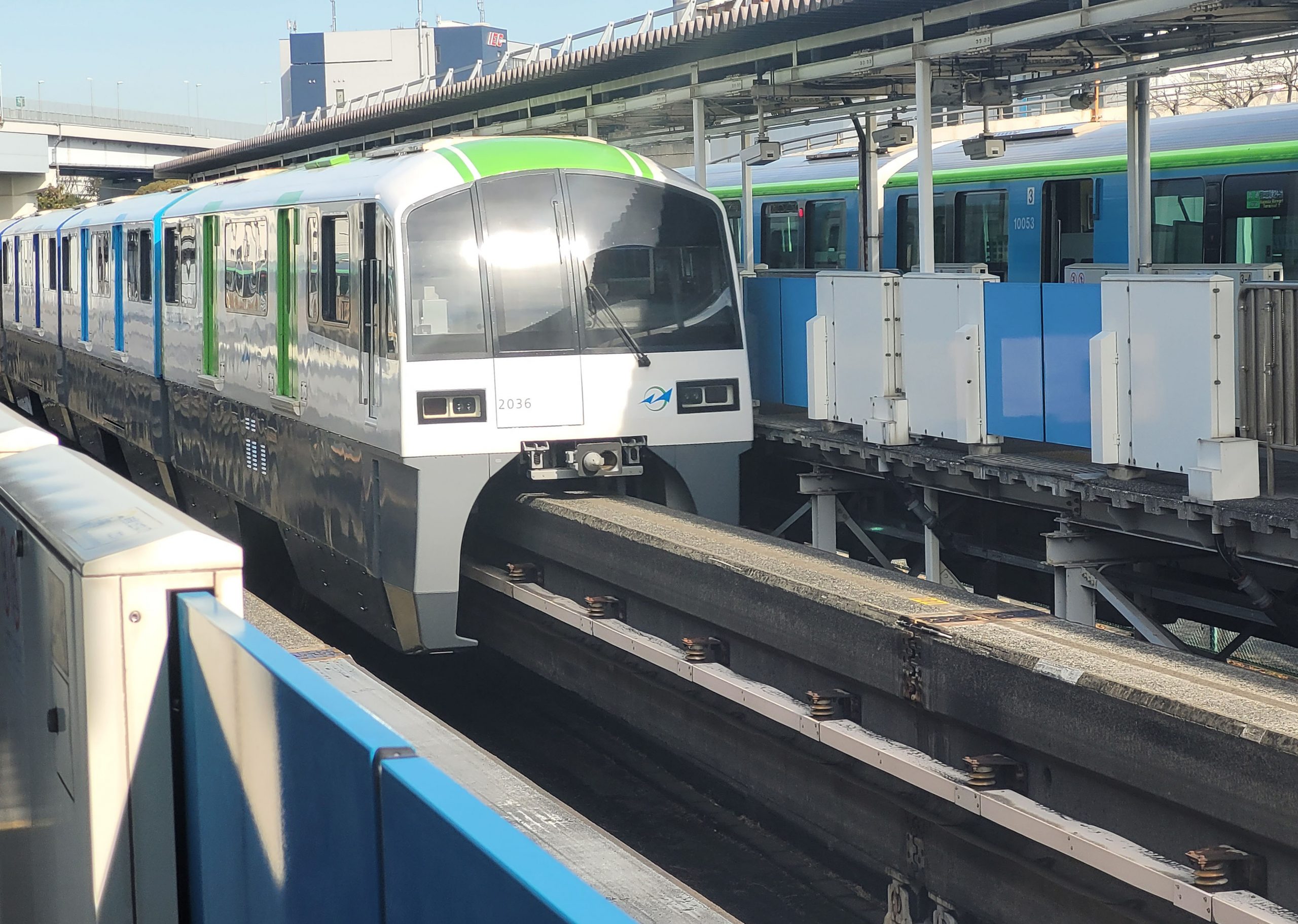
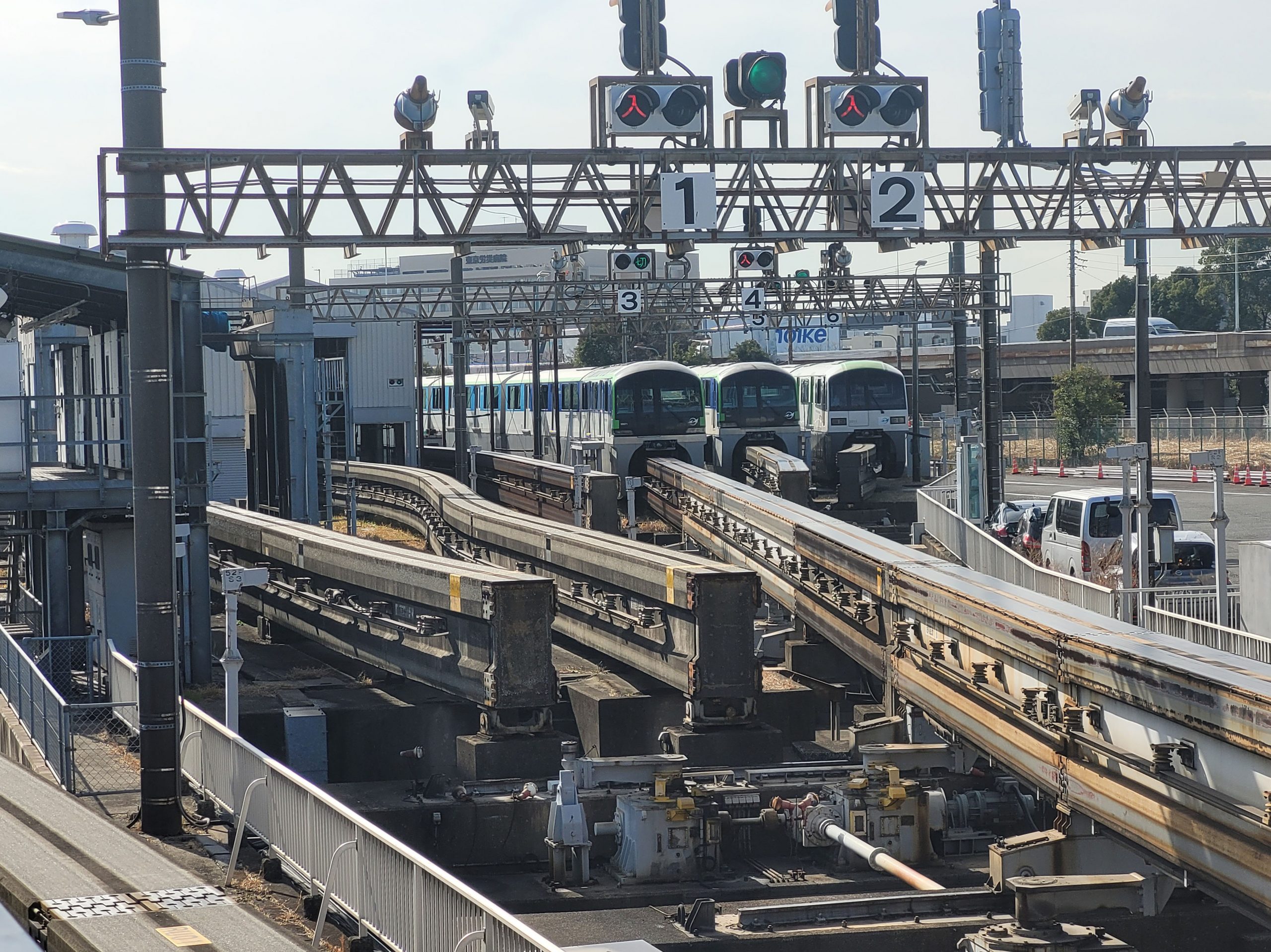
The world’s first commercial straddle beam monorail
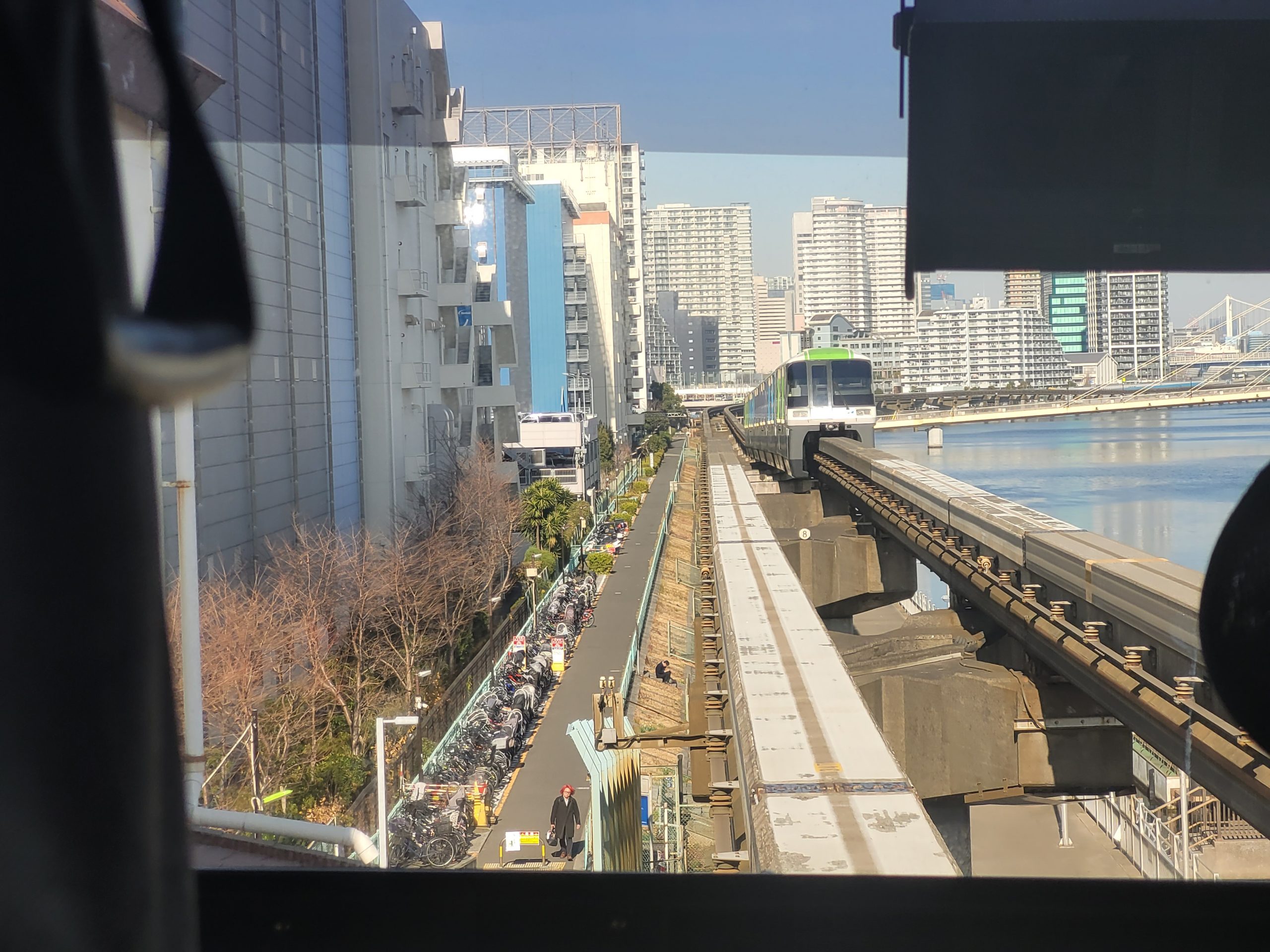
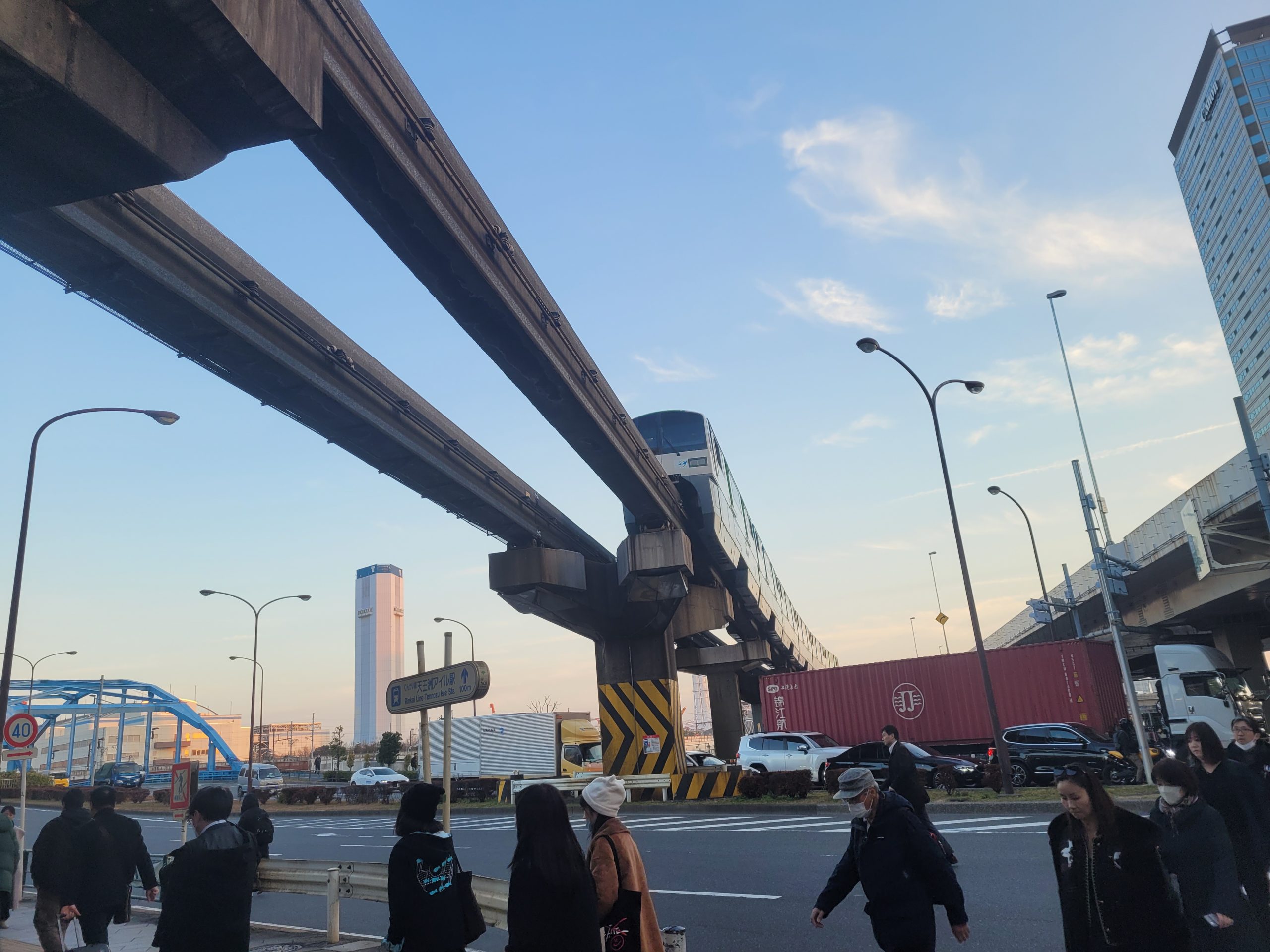
Tokyo-Haneda Monorail, Japan
KEY FACTS
- Start of operation: 1964
- Straddle beam type
- System configuration: pinched loop
- Line length: 17.8 km, 11 stations, 1 depot
- 6 cars per train
- Ridership: 90,957 pass/day (2022)
The Tokyo Monorail Haneda Airport Line in Tokyo opened on September 17, 1964, and was inaugurated for the Tokyo Olympics. This line was the world’s first commercial straddle beam (Alweg type) and Japan’s first dedicated airport rail link.
The 17.8 km line now serves 11 stations between Monorail Hamamatsuchō and Haneda Airport, runs above and below ground, and carries over 107,000 passengers daily (FY 2023) with six cars and a single depot.
KEY FACTS
| Start of Operation: | 1964 |
| Monorail Type: | Straddle Beam Type |
| System Configuration: | Pinched Loop |
| Line Length: | 17.8 km, 11 stations, 1 depot |
| Under Construction: | n.a. |
| Vehicle: | 6 cars per train |
| Design Capacity: | n.a. |
| Ridership: | 90,957 pass/day (2022) |
The Tokyo Monorail Haneda Airport Line in Tokyo opened on September 17, 1964, and was inaugurated for the Tokyo Olympics. This line was the world’s first commercial straddle beam (Alweg type) and Japan’s first dedicated airport rail link.
The 17.8 km line now serves 11 stations between Monorail Hamamatsuchō and Haneda Airport, runs above and below ground, and carries over 107,000 passengers daily (FY 2023) with six cars and a single depot.
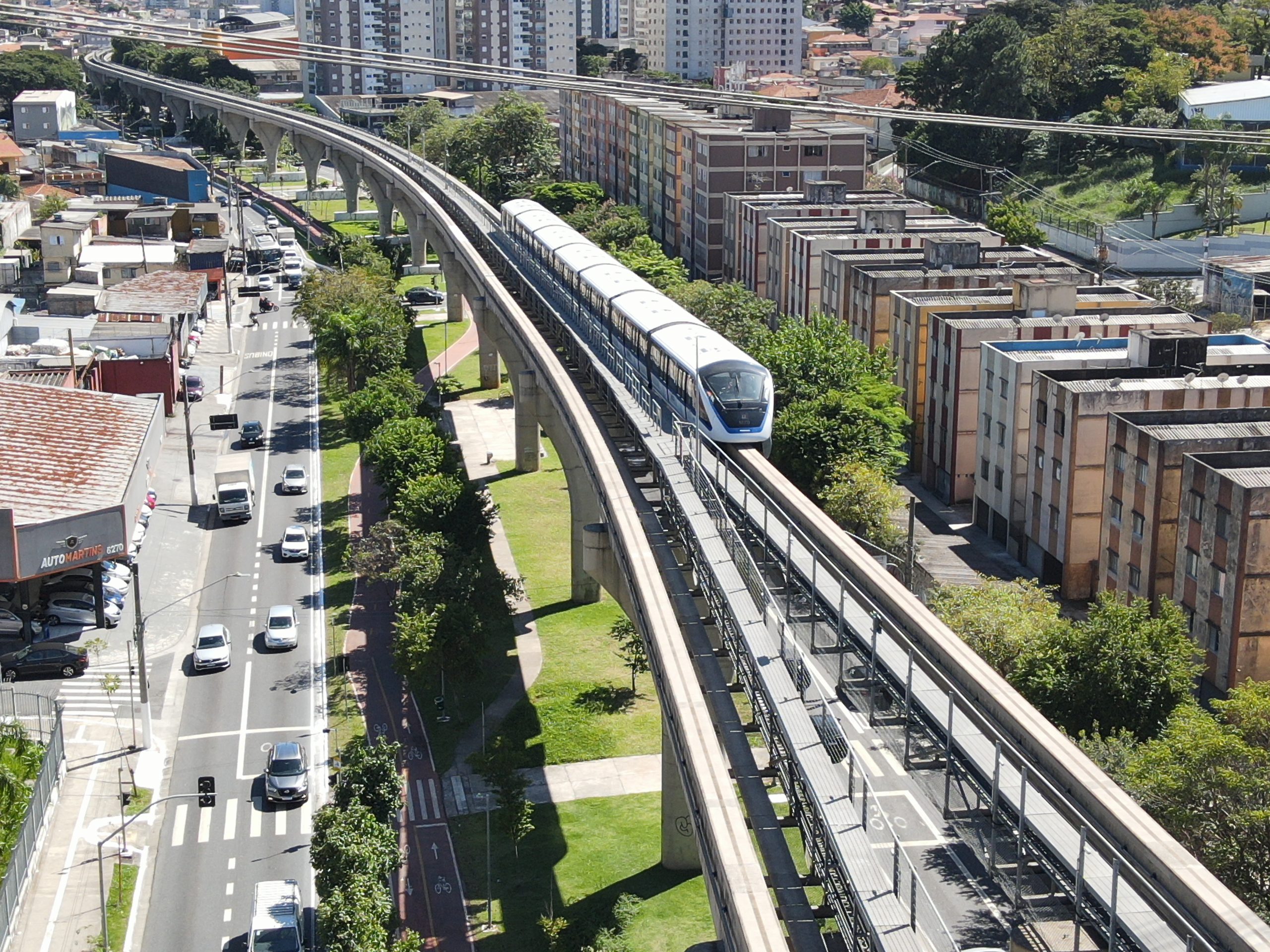
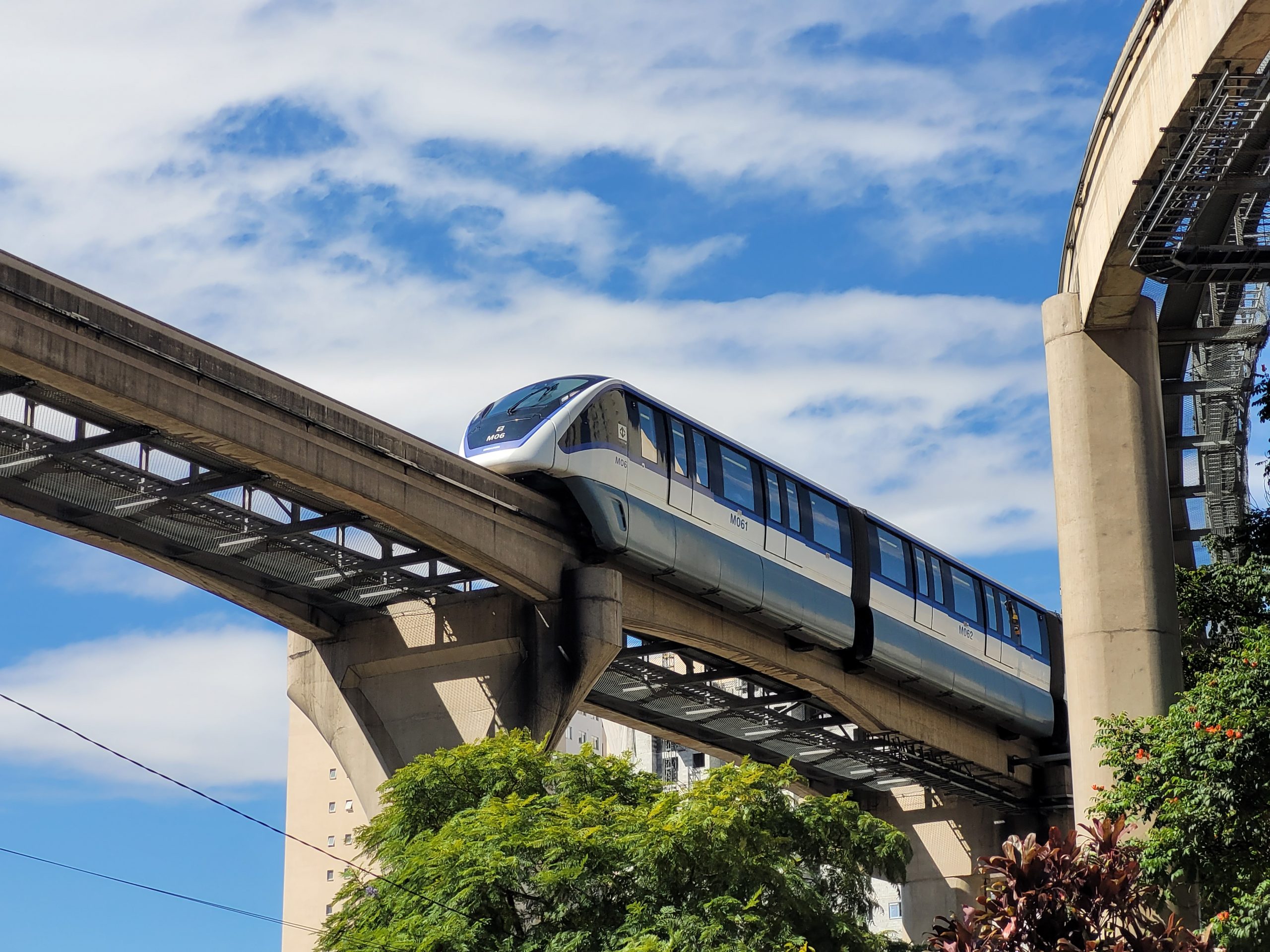
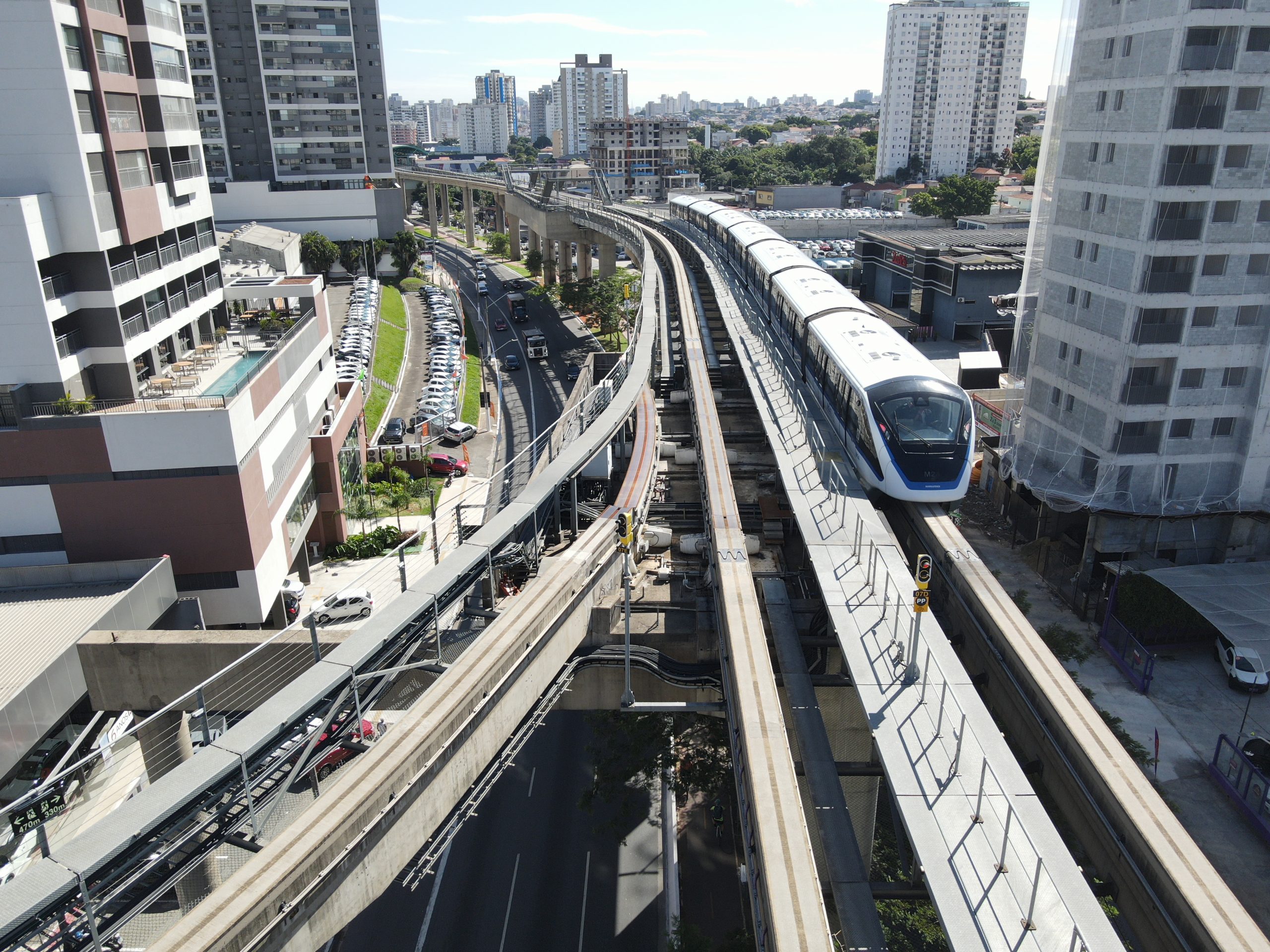
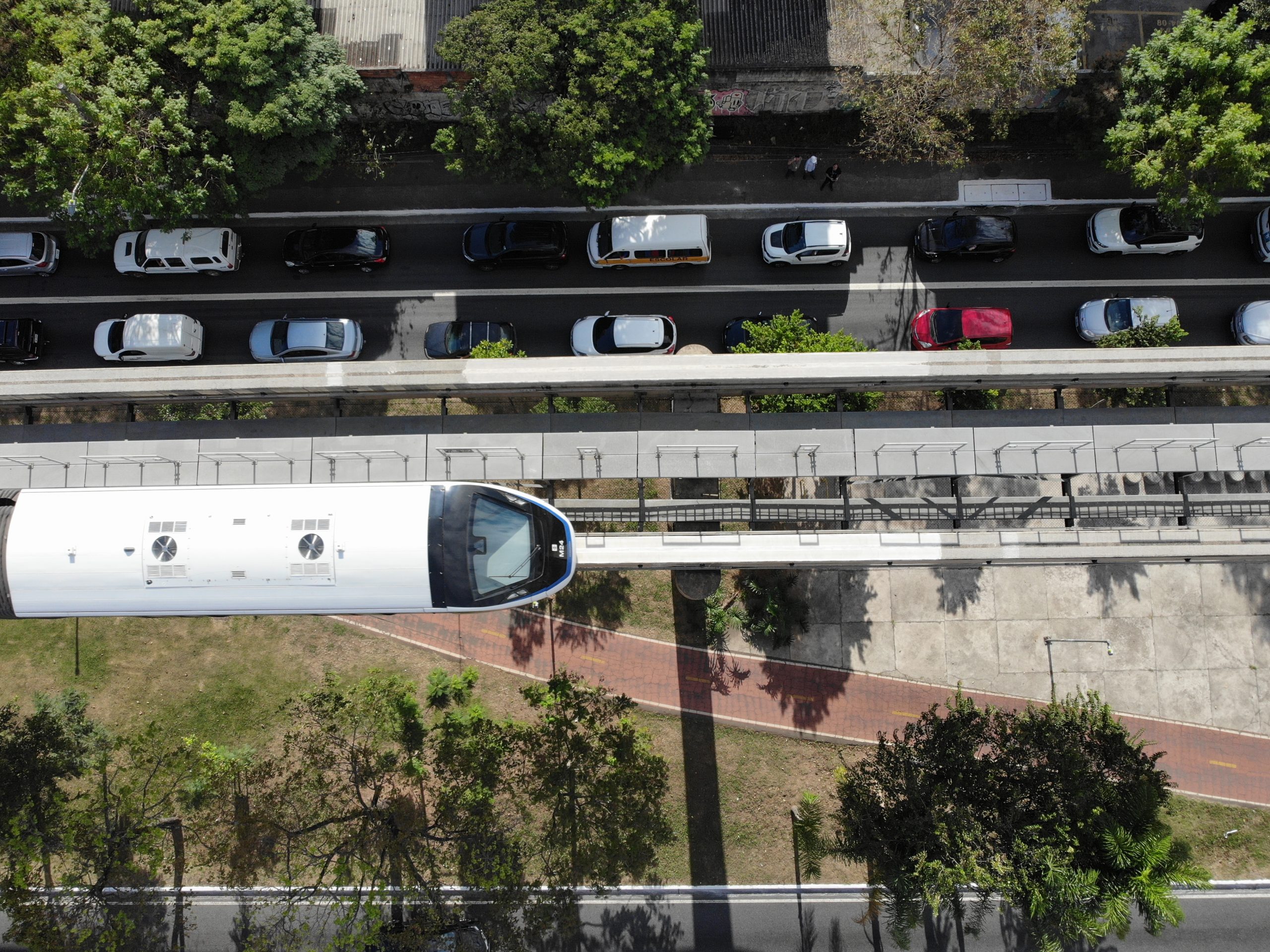
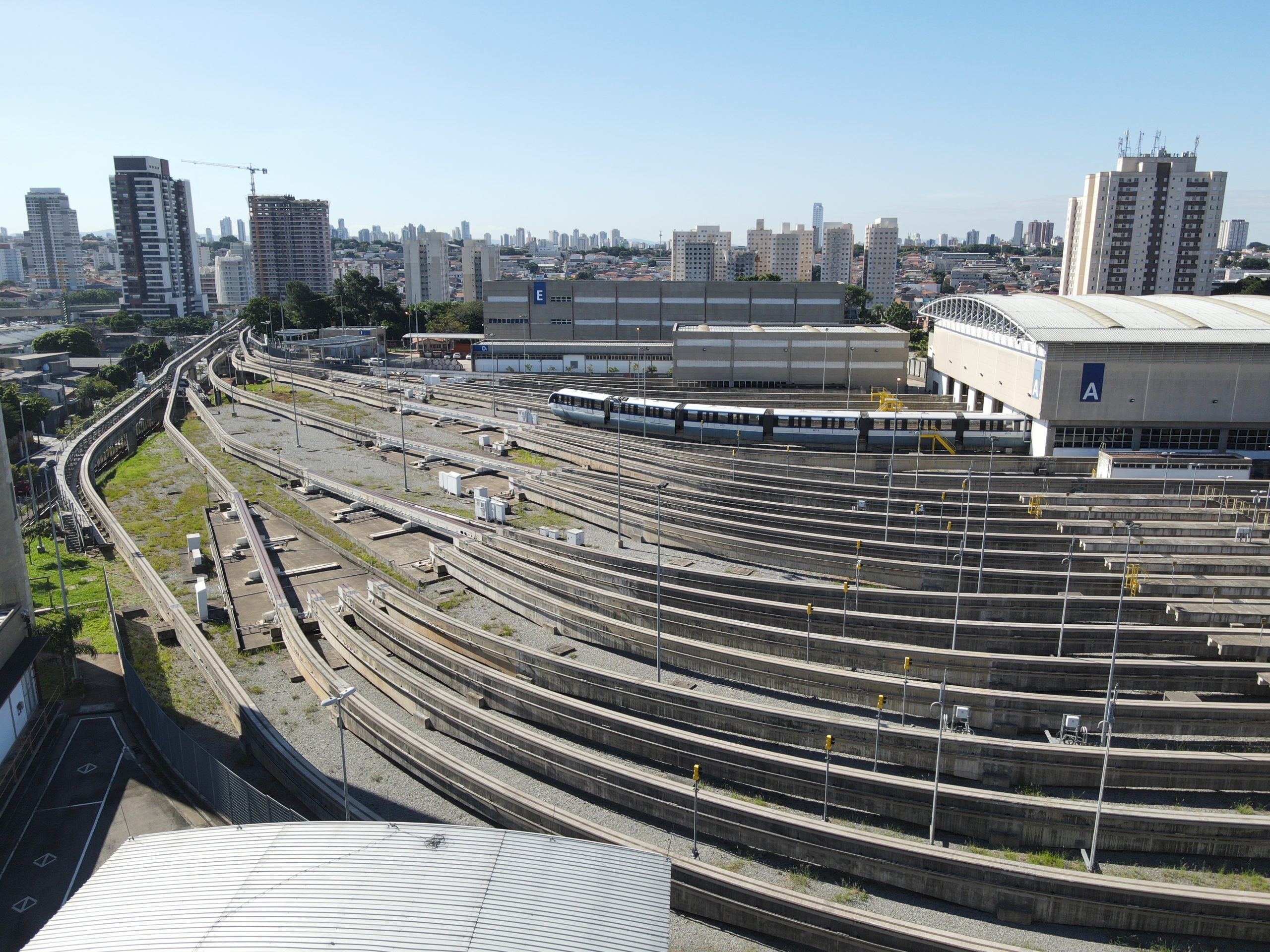
One of the highest-capacity monorail systems
São Paulo – Line 15 Silver, Brazil
KEY FACTS
- Start of Operation: 2014
- Straddle Beam Type
- System configuration: Pinched Loop
- Line length: 15.27 km, 11 stations, 1 depot
- Under construction: 6.27 km, 3 stations, 1 depot
- 27 trains, 7 cars per train
- Design Capacity: 500.000 pass/day
- Ridership: 139,000 pass/day (2024)
Line 15-Prata of the Straddle Beam Monorail in São Paulo, part of the São Paulo Metro network, began operating in 2014 and is one of the highest-capacity monorail systems ever built. The system comprises 27 trains, each with 7 cars, supported by one depot with a second under construction, and was designed for an exceptional projected demand of up to 500,000 passengers per day. Even in its current, partially completed state, Line 15 carried approximately 139,000 passengers per day in 2024, demonstrating the ability of modern straddle-beam monorails to provide subway-level capacity.
KEY FACTS
| Start of Operation: | 2014 |
| Monorail Type: | Straddle Beam Type |
| System Configuration: | Pinched Loop |
| Line Length: | 15.27 km, 11 stations, 1 depot |
| Under Construction: | 6.27 km, 3 stations, 1 depot |
| Vehicle: | 27 trains, 7 cars per train |
| Design Capacity: | 500.000 pass/day |
| Ridership: | 139,000 pass/day (2024) |
Line 15-Prata of the Straddle Beam Monorail in São Paulo, part of the São Paulo Metro network, began operating in 2014 and is one of the highest-capacity monorail systems ever built. The system comprises 27 trains, each with 7 cars, supported by one depot with a second under construction, and was designed for an exceptional projected demand of up to 500,000 passengers per day. Even in its current, partially completed state, Line 15 carried approximately 139,000 passengers per day in 2024, demonstrating the ability of modern straddle-beam monorails to provide subway-level capacity.
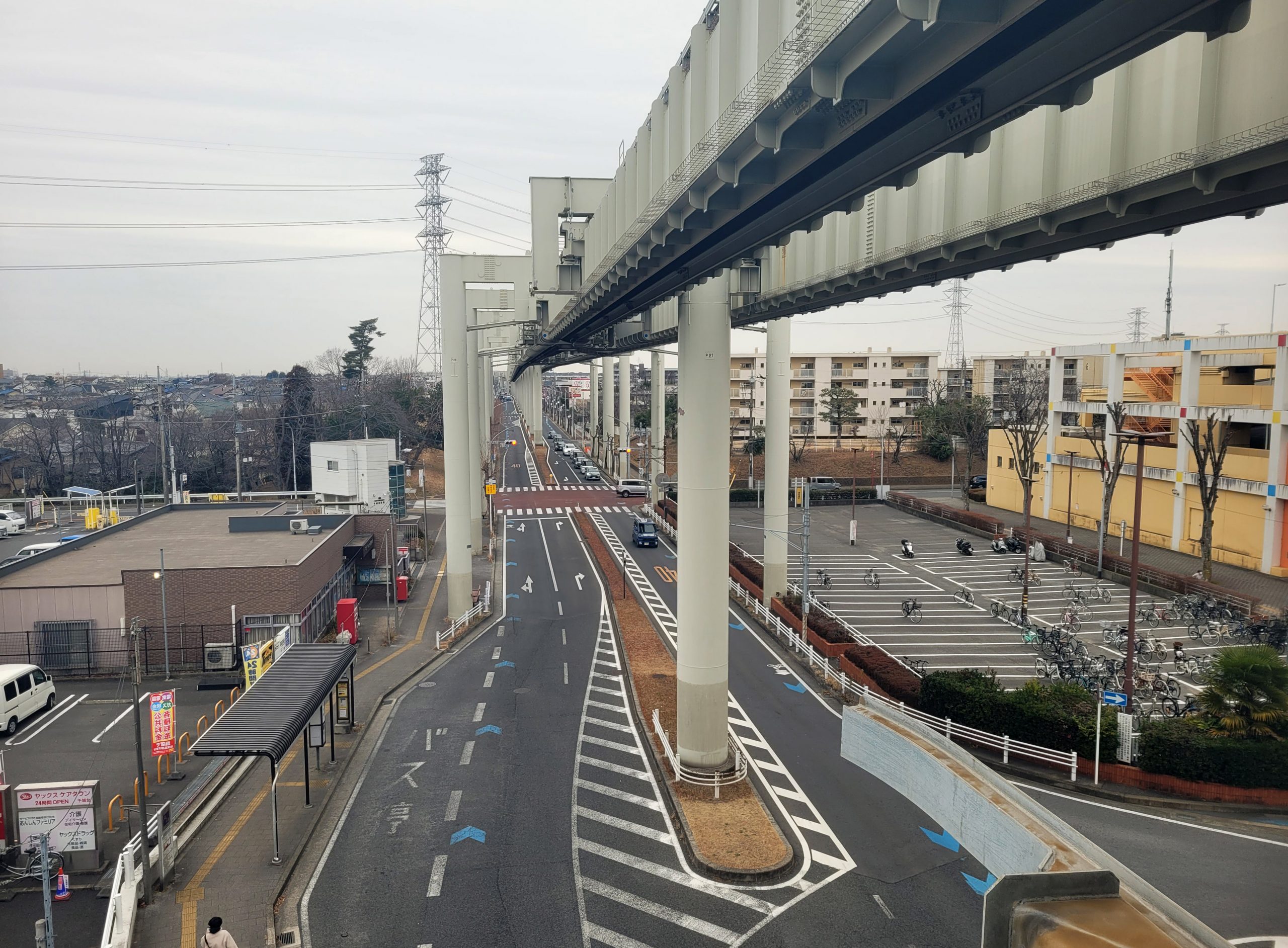
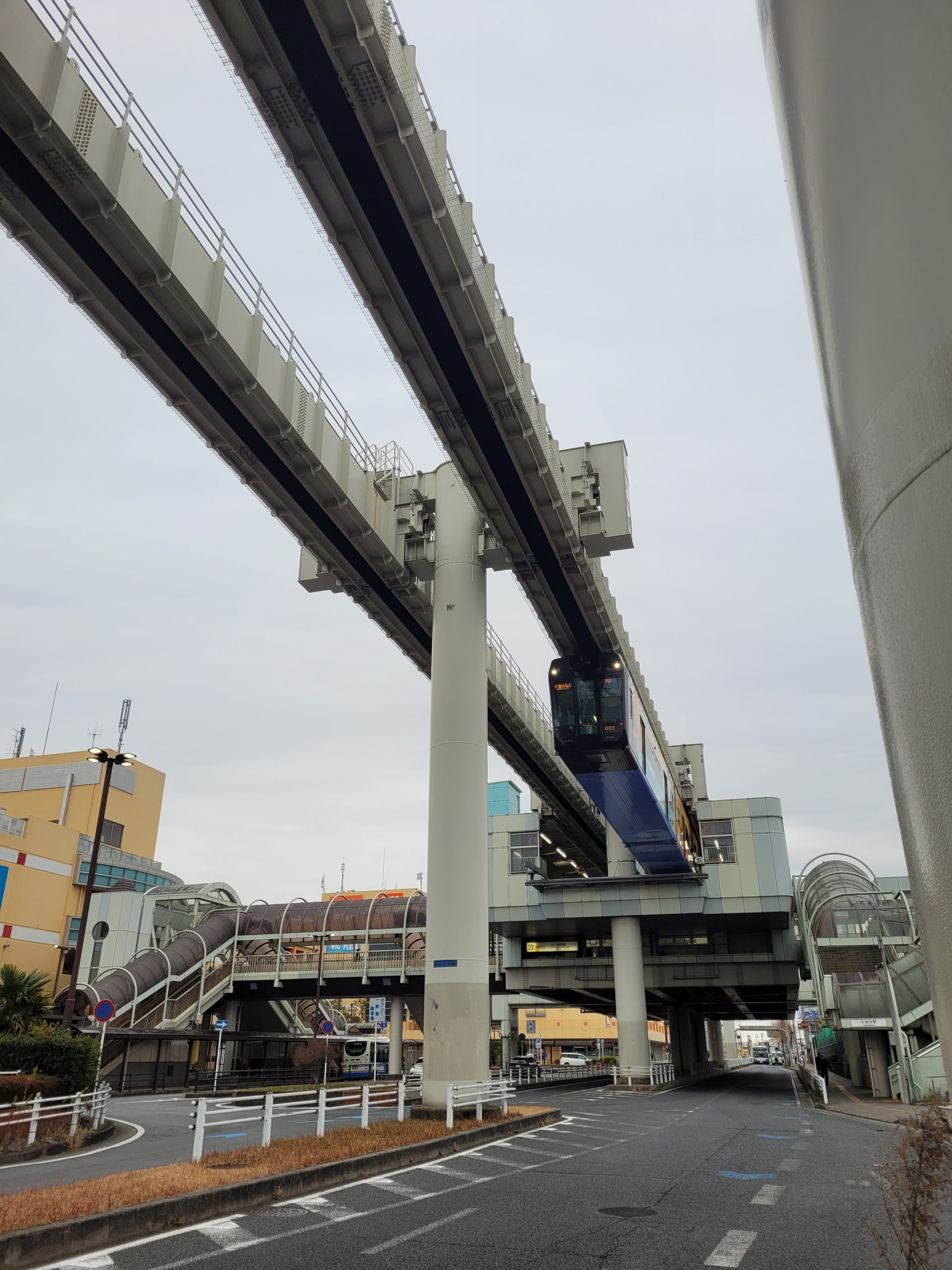
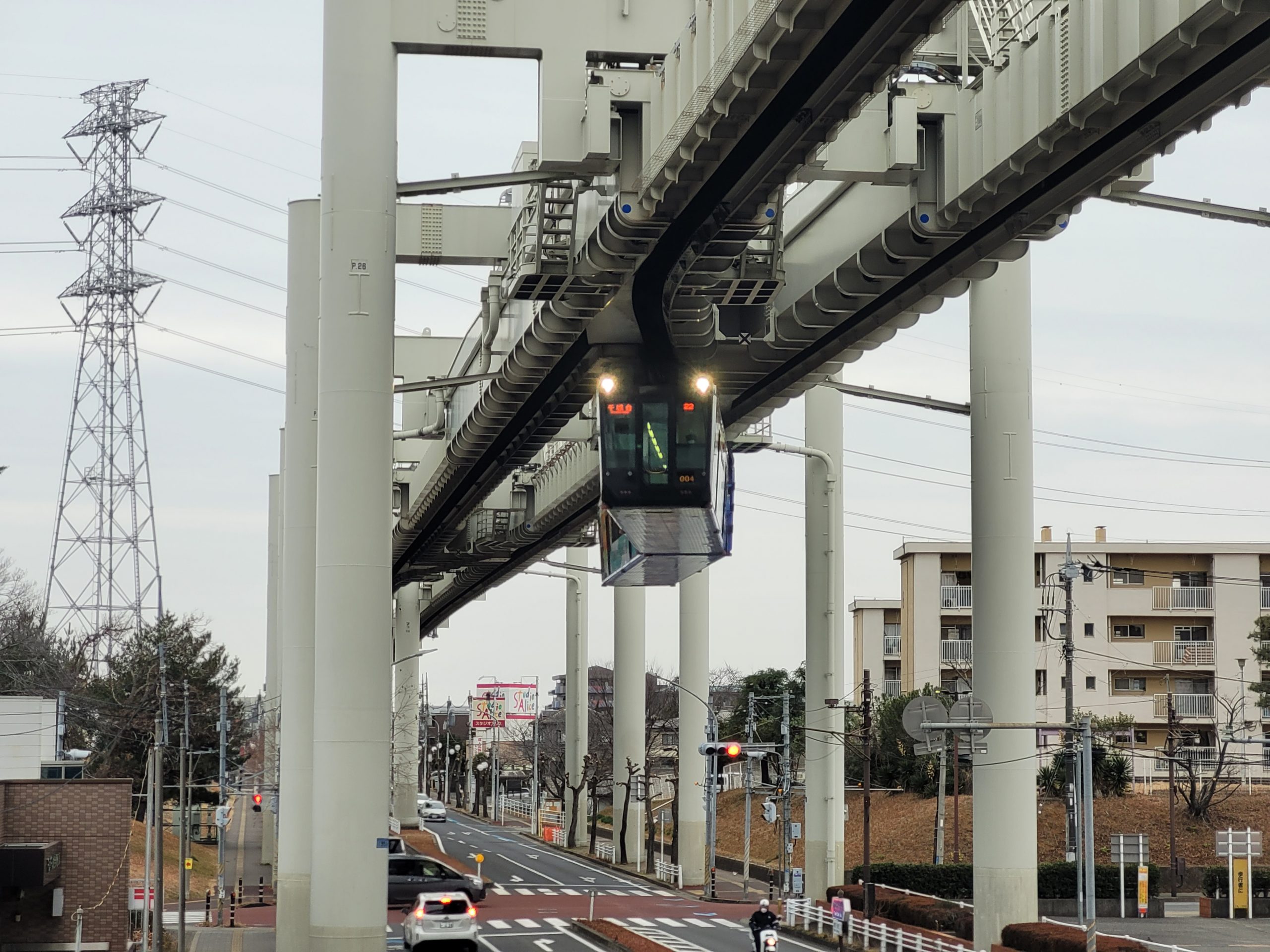
The busiest suspended monorail
Chiba Urban Monorail, Japan
KEY FACTS
- Start of operation: 1988
- Suspended Safege type
- System configuration: pinched loop
- Line length: 15.2 km, 18 stations, 1 depot
- 2 cars per train
- Ridership: 48,949 pass/day (2023)
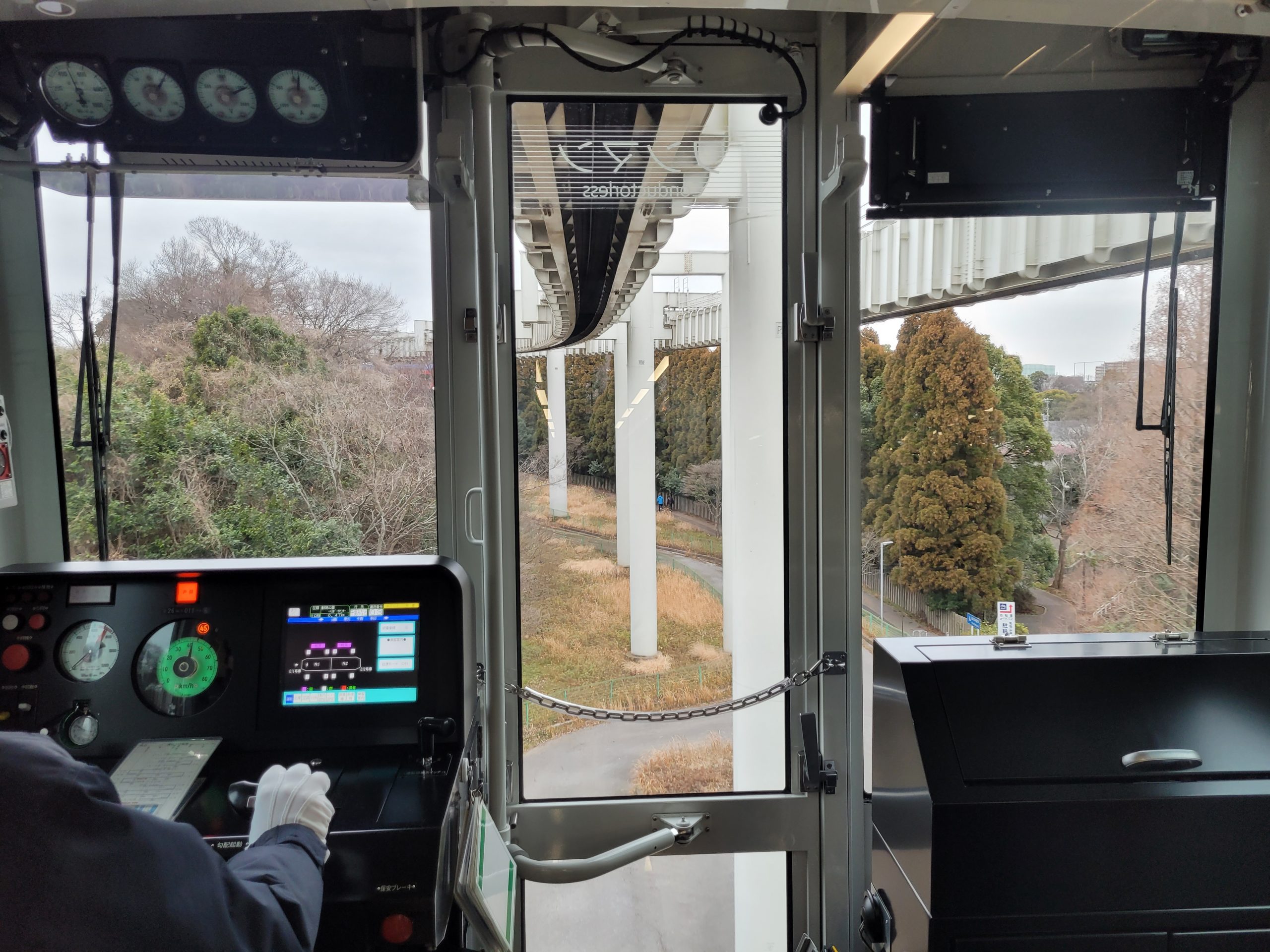
The Chiba Urban Monorail in Chiba, Japan, is the world’s longest suspended SAFEGE-type monorail system, with a total track length of 15.2 km across two lines and 18 stations. It opened in 1988, operating two-car trains from one depot and linking with several regional train lines. In 2023 it carried 48,949 passengers per day, making it not only the longest suspended monorail by length but also the busiest of its type globally.
KEY FACTS
| Start of Operation: | 1988 |
| Monorail Type: | Suspended Safege type |
| System Configuration: | Pinched Loop |
| Line Length: | 15.2 km, 18 stations, 1 depot |
| Vehicle: | 2 cars per train |
| Ridership: | 90,957 pass/day (2022) |
The Chiba Urban Monorail in Chiba, Japan, is the world’s longest suspended SAFEGE-type monorail system, with a total track length of 15.2 km across two lines and 18 stations. It opened in 1988, operating two-car trains from one depot and linking with several regional train lines. In 2023 it carried 48,949 passengers per day, making it not only the longest suspended monorail by length but also the busiest of its type globally.
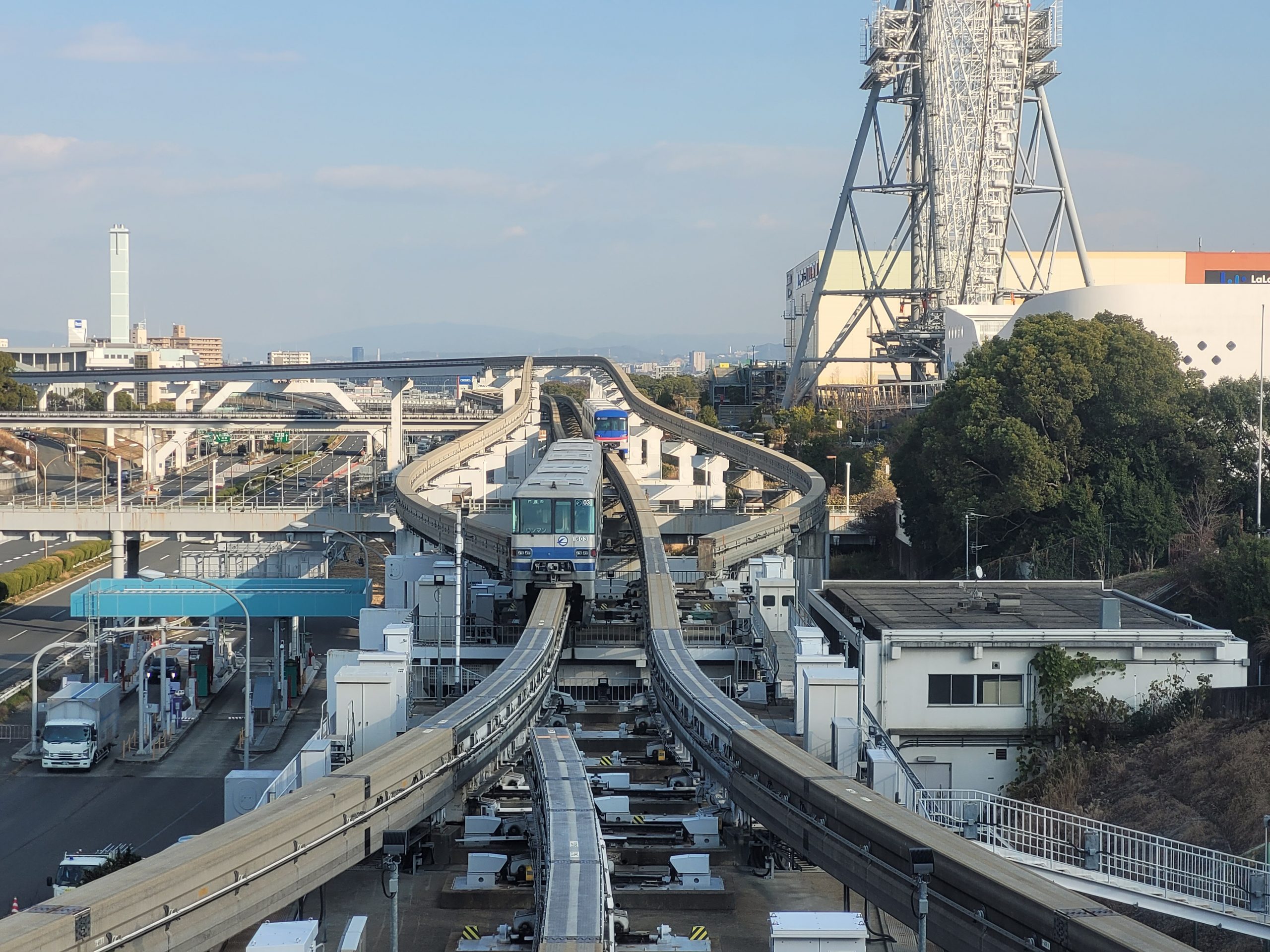
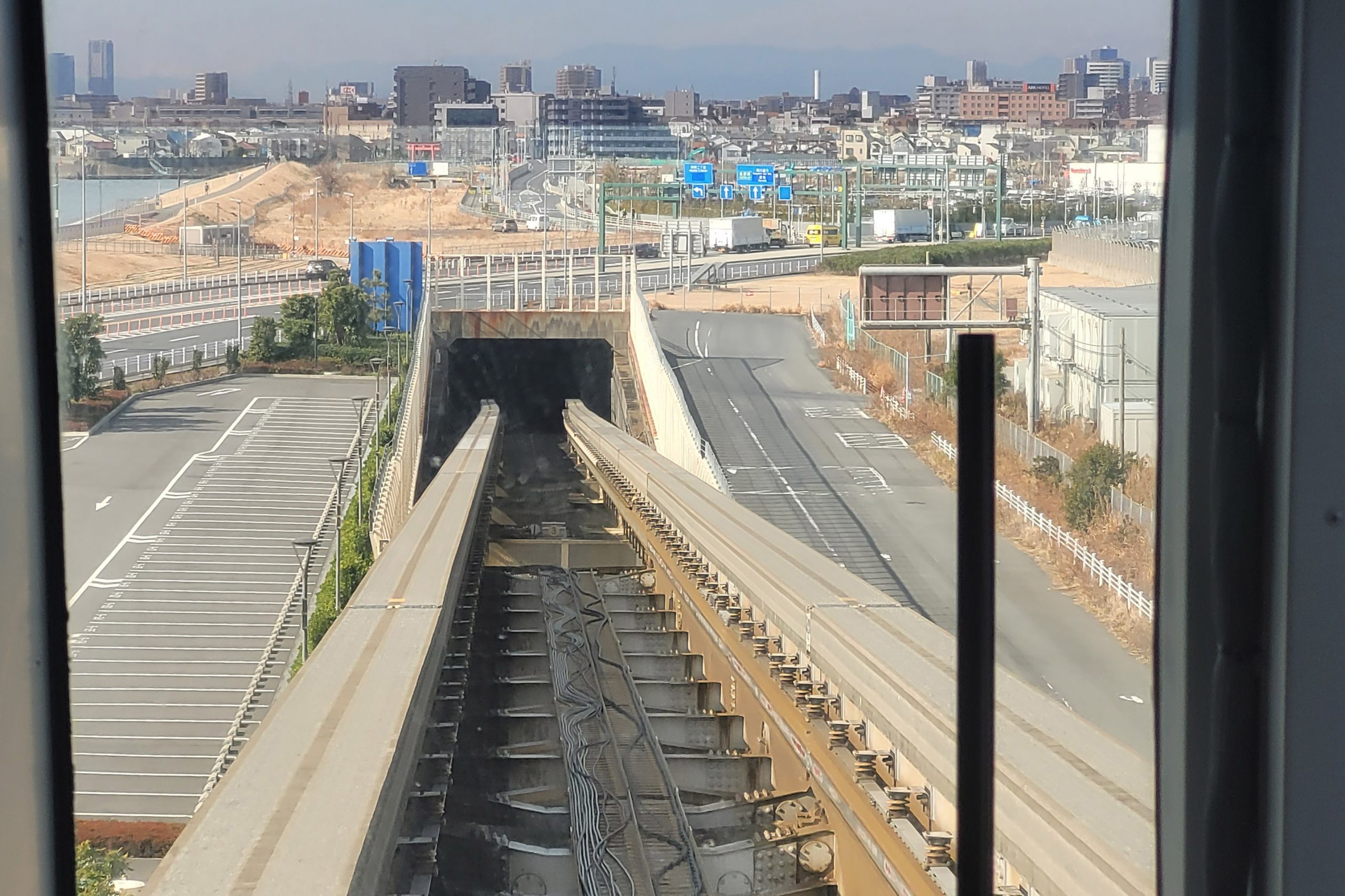
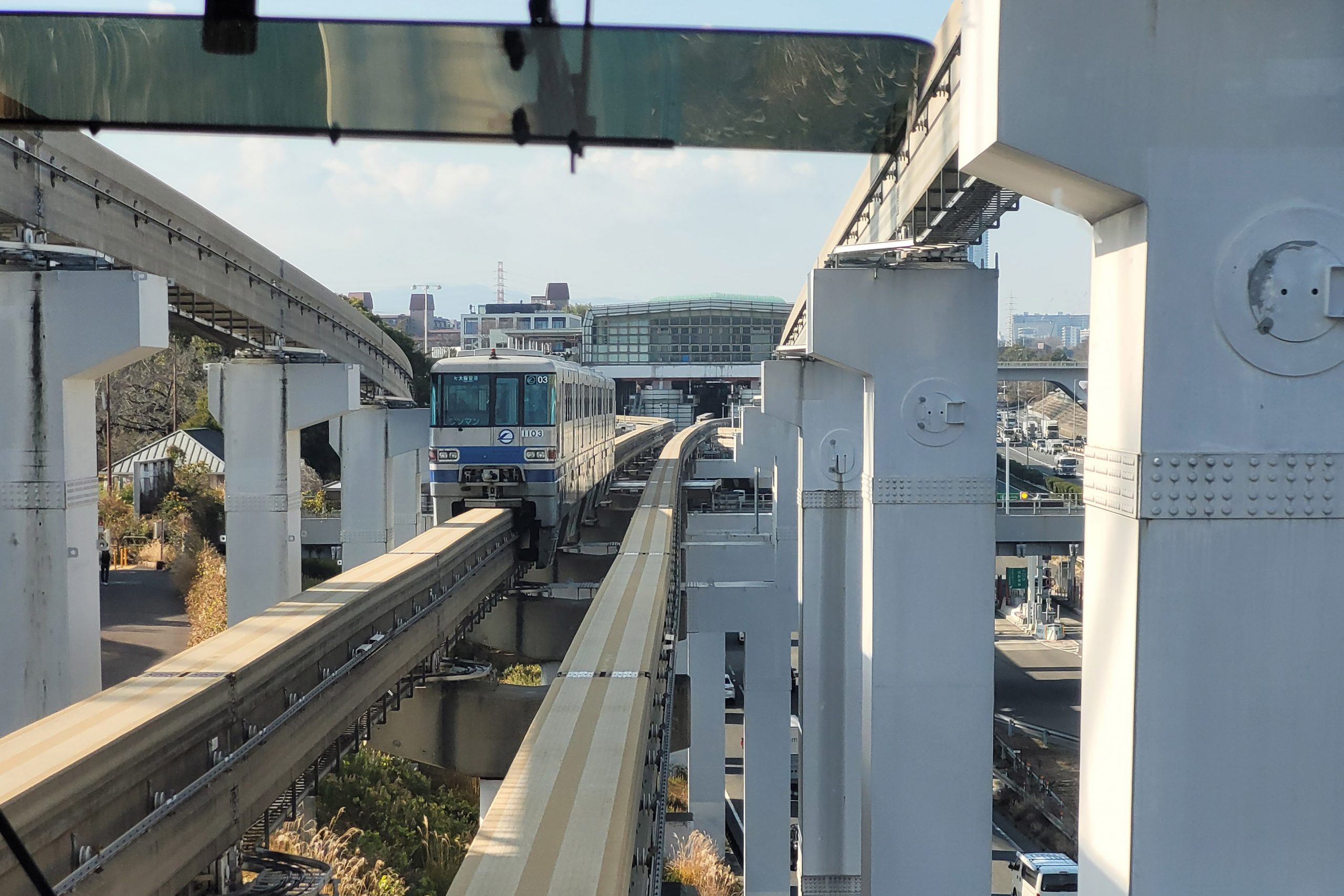
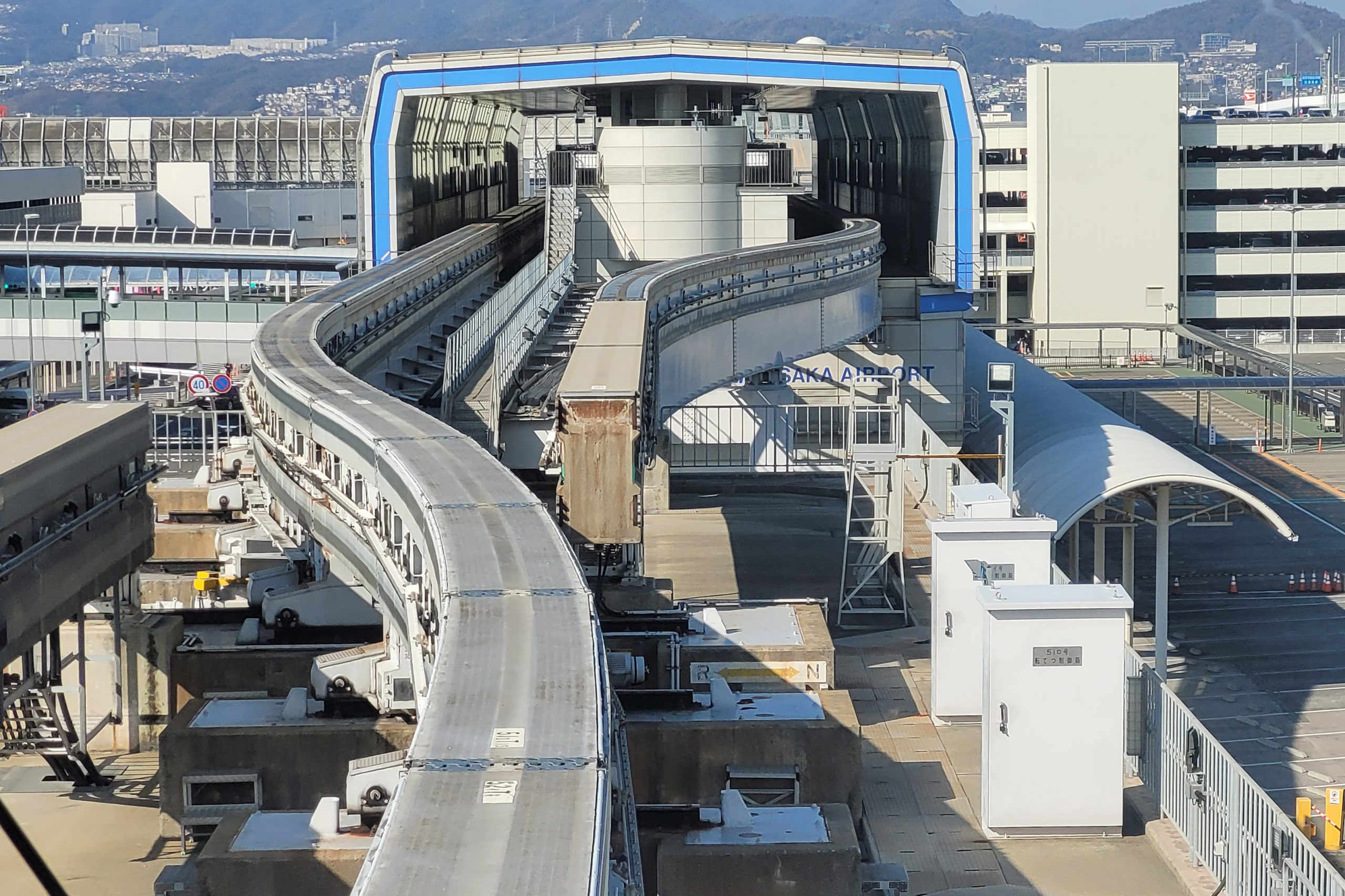
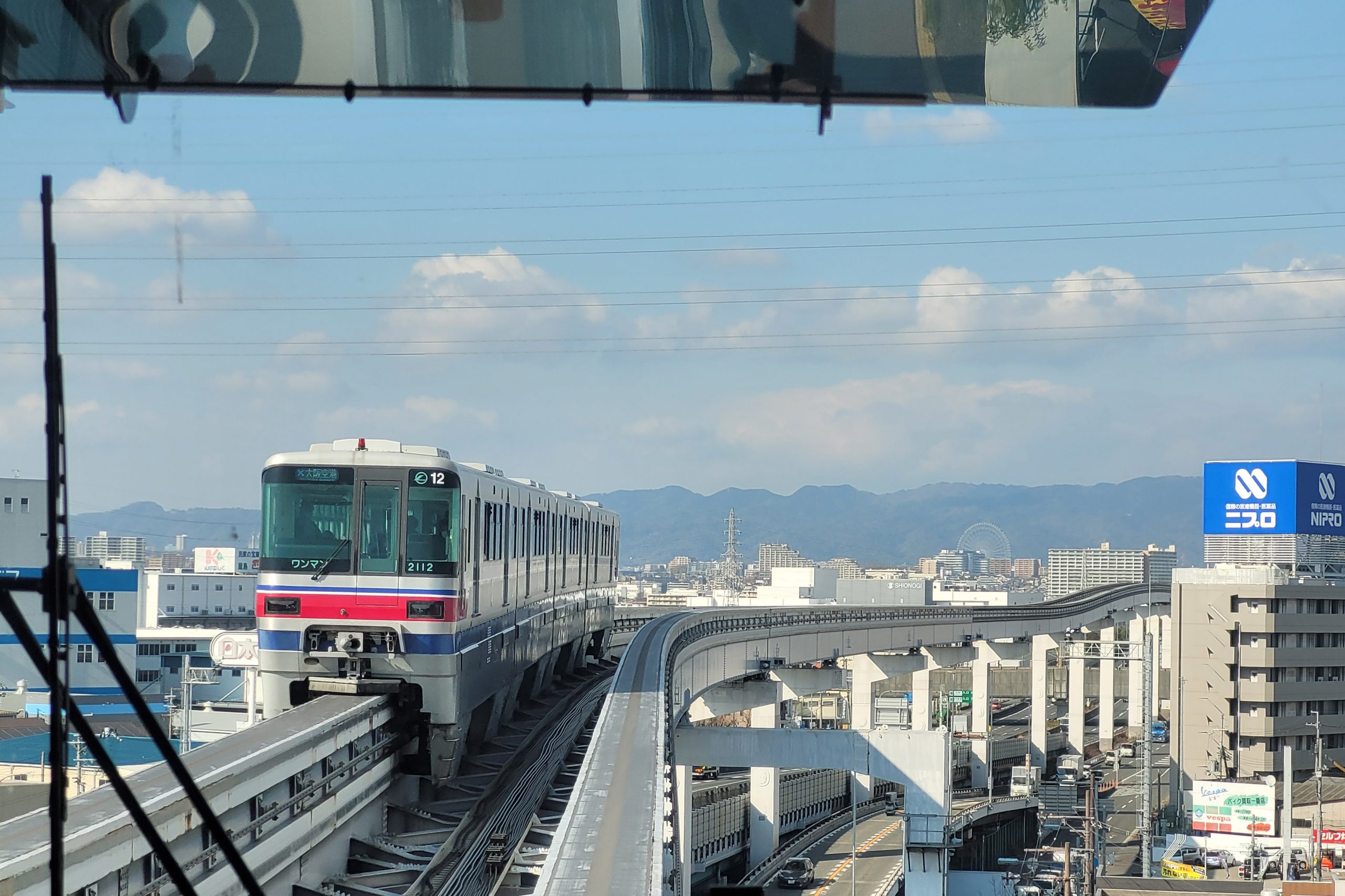
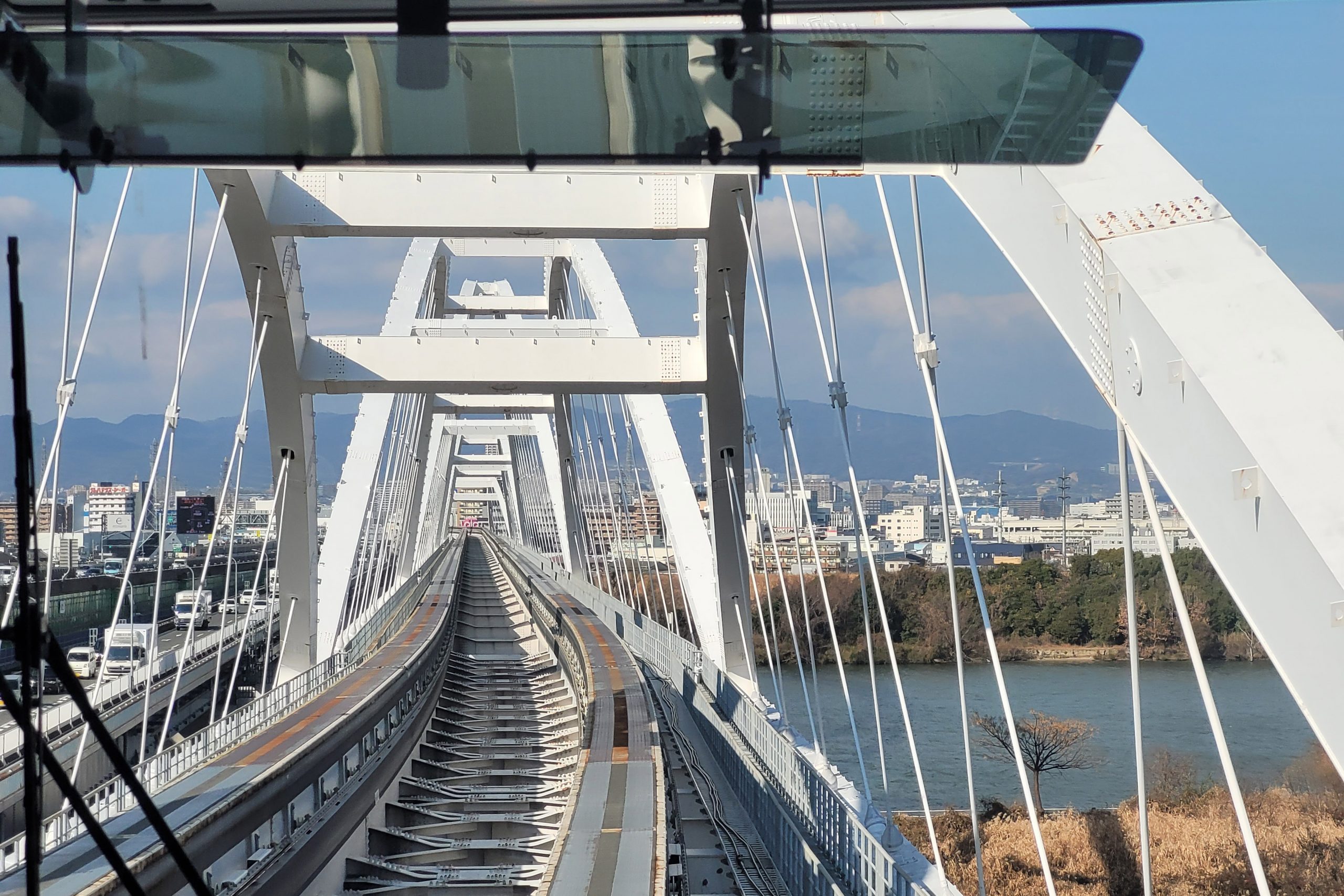
Most famous for its track switch at Kadoma-shi Station
Osaka Monorail, Japan
KEY FACTS
- Start of operation: 1990
- Straddle beam type
- System configuration: pinched loop
- Line length: 21.2 km, 15 station, 1 depot
- Under construction: 9 km, 4 stations
- 4 cars per train
- Ridership: 121,441 pass/day (2023)
The Osaka Monorail, a pinched-loop system with a main line and branch, connects Itami Airport to multiple subway and train lines and is famous for its track switch at Kadoma-shi Station. With 121,441 passengers per day in 2023, the newer trains offer panoramic views through large windows making them a standout feature of the local transport network in northern Osaka.
KEY FACTS
| Start of Operation: | 1990 |
| Monorail Type: | Straddled type |
| System Ccnfiguration: | Pinched Loop |
| Line Length: | 21,2 km, 15 stations, 1 depot |
| Under Construction: | 9 km, 4 stations |
| Vehicle: | 4 cars per train |
| Ridership: | 121,441 pass/day (2023) |
The Osaka Monorail, a pinched-loop system with a main line and branch, connects Itami Airport to multiple subway and train lines and is famous for its track switch at Kadoma-shi Station. With 121,441 passengers per day in 2023, the newer trains offer panoramic views through large windows making them a standout feature of the local transport network in northern Osaka.
The world’s longest and most busy monorail
Chongqing, China
KEY FACTS
- Start of operation: 2005
- Straddle beam type
- 2 Lines
- System configuration: pinched loops
- Total length: 98.5 km, 68 stations
- 4 and 8 cars per train
- Ridership: 1,075,000 pass/day (2023)
The Chongqing Monorail runs two pinched-loop lines through the city’s mountainous terrain, carrying 400,000 passengers on Line 2 and 675,000 on Line 3 per day. Its most famous feature is Liziba Station, where trains pass through a residential building, showcasing innovative urban design and space-saving engineering.
KEY FACTS
| Start of Operation: | 2005 |
| Monorail Type: | Straddle beam type |
| Number of Lines | 2 |
| System Configuration: | Pinched Loops |
| Total Length: | 98,5 km, 68 stations |
| Vehicle: | 4 and 8 cars per train |
| Ridership: | 1,075,000 pass/day (2023) |
The Chongqing Rail Transit monorail system operates two straddle‑beam lines (Line 2 and Line 3) configured as pinched loops that creatively negotiate the city’s steep, mountainous terrain with concrete and steel beam structures and connections including the airport and other rail lines, carrying about 400,000 passengers per day on Line 2 and around 675,000 per day on Line 3 in 2023.
One of its most remarkable engineering feats is Liziba Station on Line 2, where the monorail literally passes through the sixth to eighth floors of a residential building, solving urban space constraints with innovative design and drawing global attention, while the system’s unique integration into built structures and tunnels makes it a major urban transit model and tourist attraction.
