The Global Monorail Market*
With a market volume of more than 2 billion Euro p.a., the monorail market segment is a comparatively small, but dynamically growing segment in the transportation business.
Especially the importance of monorail systems in public transport is growing: The line kilometres of monorails have more than doubled over the past 10 years and more than 80% of those are dedicated to public transport.
Especially driven by projects in Asia, the global monorail network more than doubled in length between 2010 and 2021. This growth is expected to continue in the coming years, supported by lines that are already under construction.
The public transport monorail fleet is also expanding steadily. New projects and network extensions are expected to increase the fleet to more than 1,000 vehicles by 2025 – more than double the size recorded in 2010.
Already 7 of the world’s 10 largest metropolises have a monorail system. The means of transport is suitable both as a supplement to high-performance metro systems and as an alternative to metro or light rail systems in districts or destinations with medium traffic volumes. New traffic solutions are also possible due to the significantly simpler routing of monorail systems in demanding topographical or urban planning projects.
An Accepted Mass Transit Application
650
km
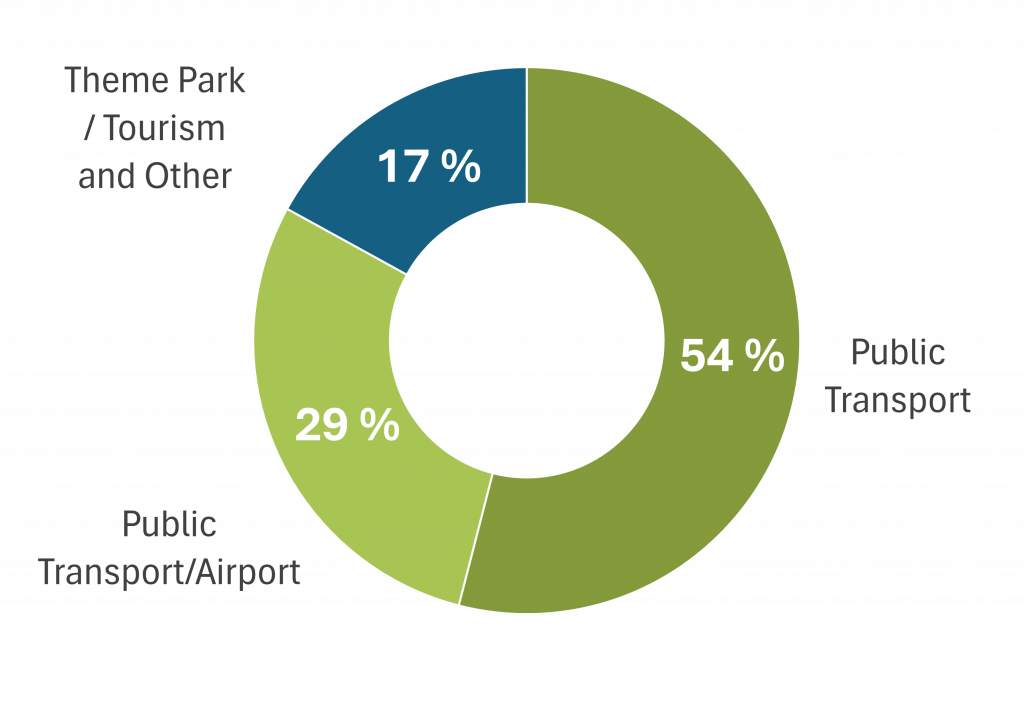
Share of line purpose worldwide
Monorail Systems have an increasing importance in public transportaion: Today, more than 80% of monorail line-kilometers are related to public transport including airport links,
650
km
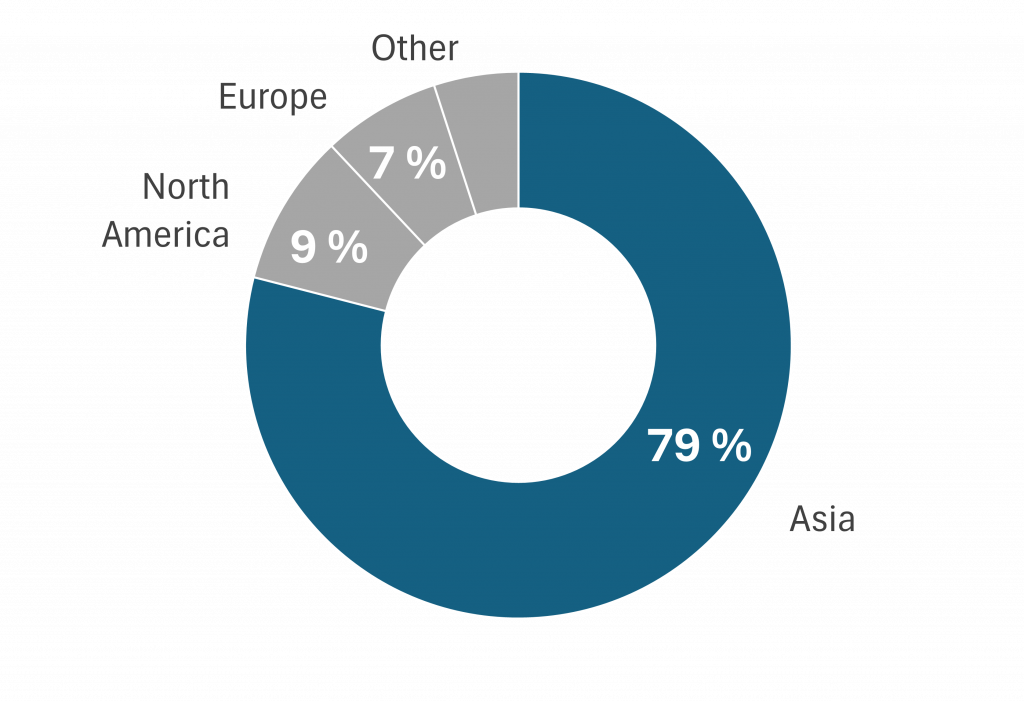
Regional Shares Worldwide, by line length
Rapidly growing cities in Asia over the past 30 years have necessitated the implementation of quick-to-implement and cost-efficient local transport systems. Today, Asia accounts for a significant 79% of the market by line length.
A Supplement to Urban Transportation
Modern technological advancements – particularly in materials engineering as well as digitalization and automation – significantly enhance the performance and reliability of automated guided transport systems such as monorails. Owing to their structural characteristics, monorail systems can accommodate tighter curve radii and steeper gradients than many conventional rail-based modes, enabling more flexible routing and improved integration into existing urban and settlement structures.
Where elevated transport solutions are required due to limited surface space, monorails offer distinct advantages over classical transport modes. This is especially relevant in dense urban environments, a condition more frequently encountered in regions such as Asia and South America than in many other parts of the world.
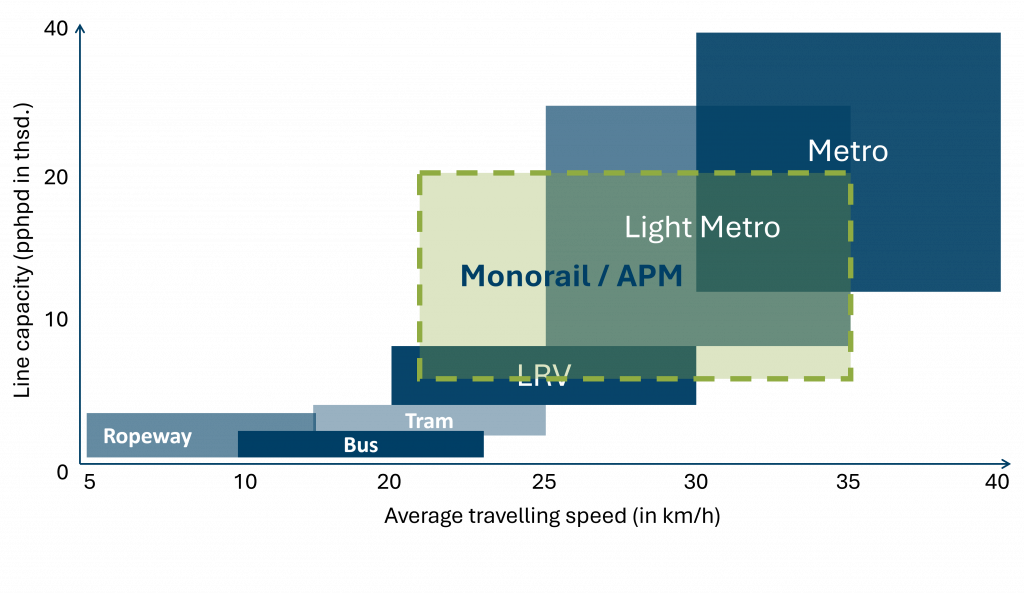
Monorail systems serve as a complementary element within the urban transport portfolio and do not represent direct competition to conventional modes, including bus, tram, metro, and light rail vehicle (LRV) systems.
*All data refer to the ‘Global Market Study on Monorail System’ by SCI Verkehr, 2022.